The future of transportation

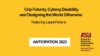
Tomorrow I have the privilege of doing the keynote speech for the opening of the 2010 Northwest Transportation Conference, being held on the campus of OSU in Corvallis, Oregon. I’ve been asked to offer “Reflections on Transportation Futures – Yesterday, Today, and Tomorrow.”

My belief is that for transportation we are at a time in history somewhat like a century ago – a time when new energy developments combined with inventiveness to radically change how, where, and when people could achieve mobility. The automobile age that began a century ago has now led to its own problems, even as it just now expands rapidly in parts of the world like China.

Looking ahead, over the next decade or two we will, nationally and internationally, need to be thinking systemically about travel demand and supply, advanced transportation technologies, and how to achieve sustainable transportation, if that is possible.

In my speech I’ll be highlighting 4 key trends – economic volatility, environmental issues remaining in the foreground, the end of cheaper and cheaper energy (which enabled the last century of transportation), and shifting demographics. From these four core trends arise four key challenges – making the energy transition, developing transportation around how we want to live rather than developing our living spaces to accommodate transportation, making Philly legal (borrowing from Duncan Black) which is to say re-inventing our towns and cities, and finally stepping up to actual breakthrough thinking.

Here are the slides I’ll be using.

Tags:

A transportation vision

One of the most interesting people trying to invent the future of transportation is Dan Sturges. An original developer of the GEM electric vehicle, more recently Dan has been a leader at Intrago Mobility, which is promoting a whole-systems approach to transportation. Recently he spoke to a SMART conference, in this 10-minute overview of the dream.

Tags: , , , ,

Job outlook improving

The U.S economy lost 20,000 jobs in January 2010, compared to a colossal loss of nearly 800,000 in January 2009. This is what progress looks like.

Source: http://www.speaker.gov/blog/?p=2144

Source: http://www.speaker.gov/blog/?p=2144

Tags: , ,

What is Smart Growth

Irises in Seattle 3 Feb 2010

Irises in Seattle 3 Feb 2010


January was the hottest month on record (going back to 1880) in Seattle, some 7 degrees F above normal You can see the evidence in this photo of my Iris’s that I just took. Kind of messes up the notion that because it was cold on the East Coast this year that global warming must be wrong. Just depends on where you look – and yes we know local weather is not global climate. That is the point. Climate change is just one issue I will raise in a program tomorrow.

Thursday February 4 I appear on a panel on for the New Partners for Growth conference here in Seattle. The panel is called Smart Housing Choices in a Changing Environment. I’ll be discussing the longer term trends that will, and must, shape smarter housing choices. And to begin I think I’ll ask about the whole concept of growth – when might we let go of the concept that populations, and regions should grow forever? The factors that I’ll mention include:

  • Income gap economics and the debtor society
  • End of a century of cheap energy
  • Climate change and impact on life style
  • Demographic mismatches

We still have further to go, despite declining home prices, to match housing in the U.S. to actual incomes. The good news is that we know, pretty much, what needs to be done to get to smarter housing choices:

  • Revise zoning and development law to account for the factors above – Duncan Black calls this making Philly legal
  • Modify values toward modesty and frugality
  • Downsize housing attractively
  • Build green
  • Build age friendly

Tags: , , , , , ,

Futurist.com Launches New-Look Website

Today marked the successful launch of the new look for Futurist.com, my home as a futurist speaker and consultant. This new Wordpress-based theme provides a cleaner and up-to-date interface, and robust options in continuing to improve the user experience.

I am particularly pleased that we’ve been able to better organize the blog and the older content archive, for those of you interested in browsing the future. For those of you looking for a keynote or for high-level consulting in long-range planning, we’ve improved our access to information on what we offer, including examples of past consulting projects, and keynote speaking event highlights.

In the About tab we’ve more clearly explained our value proposition for futurist consulting and keynotes. You will also find better information about our history, Futurist.com Associates, and contributing writers.

There are better links to social media. And, as always, we also offer a great deal of video information.

By the way, Futurist.com had 34,000 visitors and 475,000 hits in January 2010, one of our largest months.

I also want to announce that, as of Febraury 2010, Amy Frazier, for the past two years our Director of Marketing and Programs, has shifted to being a Futurist.com Associate, offering programs in creativity, as she pursues a Masters degree in the subject. We have appreciated her work here and look forward to working together in this new relationship.

Please feel free to send in questions and comments. And we are booking 2010 at the moment, so do get on the schedule for a program this year.

Glen Hiemstra is a futurist speaker, author, consultant, blogger, internet video host and Founder of Futurist.com. To arrange for a speech contact Futurist.com.

Tags: , , , , , , , , ,

Atlanta 2050 – The Fifty Forward Program of ARC

One of the most far-looking programs I’ve been part of in the past couple of years is Metro Atlanta Fifty Forward, which a project of the Atlanta Regional Commission (ARC). Today google news alerts picked up an update on their project, which continues through this year. ARC describes it this way,

What will metro Atlanta be like in 50 years? What are the key issues, trends and opportunities to consider in helping to make our region thrive in the future?

In 2008, the Atlanta Regional Commission (ARC) launched an ambitious initiative, called “Fifty Forward: A Metro Atlanta Futures Forum,” to explore scenarios for metro Atlanta focusing on our region’s future livability, prosperity and sustainability. The initiative was introduced at ARC’s 2008 State of the Region breakfast, where keynote speaker and Seattle futurist, Glen Hiemstra, challenged some 1,000 attendees to determine their preferred future and build short and long-term action steps to reach for their highest goals.

“Fifty Forward is a two-year visioning and planning effort that will convene forums around critical topics to shed light on what’s coming down the pike,” says Sam Olens, former ARC Chairman. “We want our region to be well-positioned for global success, as we travel through the 21st century. We’ve thrived on bold decisions made by our past leaders, and now we want to do our part for the next generation of metro Atlantans.”

Thus far the project has convened forums on seven different issues of importance to the long range future. Check them out here.

Tags:

Solar Powered Tents Needed

In April of 2008 I had the opportunity to attend a week-long seminar offered by Cambridge University Prince of Wales Programme on Business and the Environment. This U.S. seminar was held in Washington state.

It was a great week in every way, but one activity stood out. Late in the week participants were challenged in teams to create a new business that would help to benefit the environment, and to present a business case to the conference.

My team envisioned a global consulting business that would focus on building next generation cities. That was a good idea, but the presentation that really stood out, to me, was a simple plan to create a business manufacturing solar powered tents, aimed primarily at refugee relief and disaster programs. It was such a good idea, it was a wonder it has not been done before.

I just came across at least a concept for such a tent – whether it is ready for manufacturing or not. It is a concept tent from Orange, with solar panel. seen here:

Orange solar-tent

The concept tent was designed by Orange in association with Kaleidoscope.

Given the tremendous need for tents in refugee situations such as in Haiti, someone ought to take this on as a business.

Glen Hiemstra is a futurist speaker, author, consultant, blogger, internet video host and Founder of Futurist.com. To arrange for a speech contact Futurist.com.

Tags:

Right on Economic Growth

Now and then it is nice, as a futurist, to see that something you forecast and expected is coming to fruition, especially when what you said ran counter to a lot of common wisdom. Two economic announcements today confirm what I was saying about Microsoft in the middle of last year, and about the U.S. economy in, for example, my Outloook 2010.

First, it seemed clear to me that even as Microsoft stock was sluggish over the past year, they had three initiatives poised to return them to growth and increased profitability. These initiatives include touch computing, gesture based interactivity, and of course Windows 7. It was obvious that Windows shops around the world that had skipped over Windows Vista would very likely shift to Windows 7 as it proved itself. They cannot wait any longer. With the results that Microsoft reported today, we can see this happening, and the 2010 story will be bigger. I’ve heard insiders at a very large multinational, still operating with XP, say that the plan is to shift to Windows 7 beginning in the second half of 2010. Huge.

As for the U.S. economy, in my speech to the 125th anniversary of a Chamber of Commerce in November 2009 I turned some heads by saying that GDP growth in the 4th quarter would surprise people by coming in around 6%, and that this would bode well, eventually, for growth in employment in 2010. So far so good as 4th quarter GDP growth was the best in six years.

Tags: , , , , , , , , ,

Future of Health Care Reform in U.S. Now

The standard chorus today, following a win by Senator Elect Brown in Massachusetts, is that health care reform is either dead, or must be substantially revised to be passed into law.

I don’t know that it is dead, but it is on life support.

Somehow, in the very long process of developing the current legislation, the simple messages of improving access, covering everyone, and controlling costs, got lost.

Now, what is the way forward if you think that for the U.S. to be #1 in the world in health care spending but #37 in quality, with tens of millions uncovered, is not a good thing?

I think, and admit I missed this early on, that the simple solution would be best. This might be a piece-meal approach, or even better it could be this from Ezra Klein at the Washington Post:

“Medicare buy-in between 50 and 65. Medicaid expands up to 200 percent of poverty with the federal government funding the whole of the expansion. Revenue comes from a surtax on the wealthy.

And that’s it. No cost controls. No delivery-system reforms. Nothing that makes the bill long or complex or unfamiliar…”

Not likely to happen, but it would be a wise option.

Glen Hiemstra is a futurist speaker, author, consultant, blogger, internet video host and Founder of Futurist.com. To arrange for a speech contact Futurist.com.

Tags: , , , ,

Goodwill games to bridge U.S.-Muslim divides?

The Goodwill Games were created in the 1980’s as a brainchild of Ted Turner, in an effort to help bridge the gap between the then Soviet Union and the U.S., following the Olympic boycotts of the 1980’s. The effort was really quite successful, and I personally remember the 2nd Goodwill Games, held in 1990 here in my home-town area of Seattle, Washington.

The local promoter who brought those games to Seattle was Bob Walsh, and today in the Puget Sound Business Journal there is a story about his proposal to stage a Goodwill Games, in Seattle, for the Muslim world and the West, on the occasion of the 10th anniversary of 9/11 in 2011. The idea is to bring thousands of Muslim youth from around the world to Seattle for “four months of culture bridging events.” The idea has attracted an initial contribution of $200,000 from the Gates Foundation.

While the situation today is not exactly analogous to that between the Soviets and Americans in the 1980’s, I think it sounds like a good idea. It would be an opportunity to celebrate our common humanity and aspirations.

Check out the idea – subscription required for full access but you can get the basics here.

Tags: