There are three convergent items that all raise the question of the link between global warming and future fossil fuel use. Recent testimony to Congress from oil executives once again included assurances that there is sufficient oil to last for decades, and that no matter what, oil, coal and gas will still comprise the vast majority of energy supplies in use.
This has been a generally accepted view for two reasons, first the fact that oil reserve estimates have generally grown sufficiently that there is always a “40-year” supply on the books. However, the European branch of the OilDrum (which publishes a variety of credible challenges to this assumption) this week pointed to a most intriguing advertisement (PDF) placed in national publications by Shell Oil. This “advertisement” is one of a series of “conversations” about the future of energy. But intriguing is not really the right word, rather the appropriate description is “disturbing.” In it Jeremy Leggett, a UK expert on peak oil and climate, puts it this way:
Renewable and efficient energy technology will have to replace fossil fuels far faster than most people currently anticipate.
It is interesting to speculate why Shell is publishing this at this time, but one possibility is that they are preparing the field for the future. You can watch a video of Jeremy at YouTube.
Second, Dr. James Hanson, NASA climate specialist took note of the expectation that we’ll just look for more expensive and dirtier fossil fuels to keep the global engine running, an article of faith for many as noted. Hanson, speaking to the Guardian in the UK, argued that recent science is asking if the accepted global target for maximum CO2 in the atmosphere is in fact too high. He put it this way:
“If you leave us at 450ppm for long enough it will probably melt all the ice - that’s a sea rise of 75 metres. What we have found is that the target we have all been aiming for is a disaster - a guaranteed disaster,” Hansen told the Guardian.
Hanson is now beginning to advocate that we quickly phase out fossil fuels for transportation.
Finally, we turn to Al Gore again. He recently spoke to the 2008 TED conference, and the video of his short program was just posted by them. He takes on some of the standard challenges to global warming science - such as it being a simple natural cycle, or the result of sun cycles - but mostly he communicates a sense of urgency worth thinking about.
Share and Enjoy:
These icons link to social bookmarking sites where readers can share and discover new web pages.
Before this week is over, I wanted to alert you to a video that I just came across, in an article on Robots at a blog site called Open the Future.
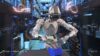
This video is of a “packbot” called “Big Dog.” The robot was built by Boston Dynamics. Watch the video, and then I’d suggest you check out these sources.
This robot is spooky. Makes me think way more than ever that robots will indeed be important to out nearer term future.
Share and Enjoy:
These icons link to social bookmarking sites where readers can share and discover new web pages.
Water is vital to the health of our future. We cannot begin to address the way we structure our communities for long term well-being and productivity, without devoting serious attention to the role that water plays.
Focus is often given to the populations in the world for whom water is already a scarce resource, and to those geographical areas where we see increasing desertification. But even in places like the Pacific Northwest—notoriously rain soaked—we are seeing a trend toward rethinking and redesigning how we use water.
Cites like New York, Chicago and Seattle have already put important projects on the map. The Hearst Building in New York captures rainfall from the roof to support the indoor landscaping, and humidify the air. In Chicago, a Green Roofs Initiative helps abate the urban heat island effect, as well as capturing rainfall before it becomes storm run-off. Similarly, the Seattle High Point Neighborhood has developed a large scale natural drainage system which, when completed, will process water the way a forest meadow does.
There are many other innovations being implemented in communities around the country. Our growing realization of the need to channel water wisely will be instrumental in moving us toward a healthy future.
Share and Enjoy:
These icons link to social bookmarking sites where readers can share and discover new web pages.
I am always interested when Matt Simmons, author of Twilight in the Desert, appears on the TV and comments on future oil prices. He is an oil analyst with a penchant for telling the truth rather than spinning either overly optimistic or pessimistic stories about peak oil (the day we will have used half the total global supply).
Last week he dropped into CNBC. Among other things, he anticipates $300 a barrel, though he says it is not possible to know just when this will be the case. But most important in this video, I think, is that he puts to rest the ridiculous notion that Alberta tar sands are somehow the answer to future energy needs. Take a minute to watch.
Update: Oil closed just short of $108 today, March 10, 2008.
Share and Enjoy:
These icons link to social bookmarking sites where readers can share and discover new web pages.
This is a very good list of the top ten “dystopian” films ever made. Each film communicates its own warning about possible futures worth avoiding. Check out the list at TakePart blog. The blog provides action links related to the issues raised in each film.
Share and Enjoy:
These icons link to social bookmarking sites where readers can share and discover new web pages.
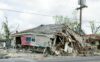
I’ve read a lot of books about climate change in the past few years. Two of the most stunning are essentially picture books. I think I know why they had a bigger impact on me than traditional books. When I talk with people about climate change, the ones who live close to the land all, universally, get the stakes. They seem to have a serious sadness, and a fierce determination about them. They know what’s at stake personally – this tree, that animal, this lake, that beach. There’s some variation on how much is our fault and what we should do about it, but there’s no doubt about it happening. When you know nature, and you’ve been watching the last decade or so, rapid climate change is fact. If I’m talking to people who live in cities, many of them are either serious skeptics, or appear to be imitating Chicken Little. These two picture books show us what’s at stake, with the usual power of great photography to speak volumes of words.
The first book is Storm Chaser, A Photographer’s Journey, by Jim Reed. Storm Chaser relates well to my own predictions about climate change for 2008, which include more weird weather. The book is a series of beautifully presented professional photographs of storms, and might be worth buying just for the photos. But its real strength is in the straightforward narrative about global warming and climate change. Storm Chaser is organized by season, and each season includes a discussion of storm chasing and of the beauty and mystery of that season. This discussion - and the accompanying photos - show how climate change is now a central thread for people fascinated by powerful weather. It is the elephant in the sky that can’t be ignored. The website for Storm Chaser is beautiful, by the way, although only worth visiting with a fast connection.
The second is Vanishing World, the Endangered Arctic, by Mirelle de la Lez and Frederik Granath. The photos are stunning. Unlike Storm Chaser, where the narrative is as important as the photos, Vanishing World is clearly about the pictures. Each shot is spectacular, designed, I believe, to make the reader fall in love with the arctic. To make us see the stakes. Not that the text isn’t moving…it says things like “Old ice…is a tremendous source of information for scientists. It is an archive of the earth’s climate. Dating back thousands of years. When we lose our glaciers, we lose our history.”
Share and Enjoy:
These icons link to social bookmarking sites where readers can share and discover new web pages.
One of the great thinkers on the future is Ray Kurzweil, author of The Age of Spiritual Machines, and The Singularity is Near. A couple of years ago at a meeting of the World Future Society I heard Ray speak, and after the talk during Q&A, a 90-year old man in the audience asked, “How much longer will I need to live, in order to live forever?” It sounds like a crazy question, but Ray had argued that given the current rate of advance in biotech, nanotech and medical IT, it is logical to assume that at some time in the relatively near future the human life span (which has more than tripled in a few hundred years) will begin to increase one year for every year that goes by; in other words, life extension into the infinite future. In aswering the man’s question Ray said, it looked like to him about ten years - that if you could hang on for ten more years, then life would begin to extend another year on an annual basis.
Now, this seems too optimistic to me, and if it is indeed a probable future is not likely to be real for some 25 to 100 years. Never-the-less, when we consider the current societal impacts of aging, and then ponder a world in which 100, 120, 150 years old might be common, then we imagine a new world.
A leader in the study of the potential of nanotechnology, Ray was recently interviewed on the future of human health. You can access the audio and the transcript here at Living on Earth. In the interview, Ray discussed among other things the prospect of nanomachines integrating with biology and becoming part of us:
Ah, if you talk to a human in 2035- biological human- they’re going to have a lot of non-biological thinking going on inside their brain- it’s going to be a hybrid of biological and non-biological thinking. And the non-biological thinking will expand because of this law of accelerating returns not because it’s self-replicating, because that’s just the nature of our technology- it doubles in capability every year. But in my view it is still human thinking. It’s an expansion of our civilization, which has always been a human-machine civilization.
Share and Enjoy:
These icons link to social bookmarking sites where readers can share and discover new web pages.
This just hit the web at OilDrum, news of new future scenarios from Shell. Known for their scenario work in the past, the CEO of Shell, Jeroen van der Veer, sent this memo to Shell employees, and released it on the Shell website.
What does it say? That the energy picture is changing rapidly. Two alternate scenarios, “scramble” and “blueprints” take us to the same future:
Regardless of which route we choose, the world’s current predicament limits our room to maneuver. We are experiencing a step-change in the growth rate of energy demand due to rising population and economic development. After 2015, easily accessible supplies of oil and gas probably will no longer keep up with demand.
Share and Enjoy:
These icons link to social bookmarking sites where readers can share and discover new web pages.