Nikolas Badminton will ignite your curiosity & growth
Nikolas Badminton will shift mindsetS to WHAT IF…
Nikolas Badminton will help supercharge innovation
Futurist Speaker, author & executive advisor
Nikolas Badminton educates and motivates world-leading executives, organizations, and governments on how to ignite curiosity, transformation and change to drive sustainable profit, increased market value and hypergrowth.
His keynotes inspire executives to create powerful visions of the futures, question how we work today, and explore how we need to create resilient and thriving industries power next level human ability.
Book Nikolas
Nikolas Badminton – Chief Futurist & Hope Engineer
Book Nikolas
Nikolas Badminton is the Chief Futurist of the Futurist Think Tank. He is world-renowned futurist speaker, award-winning author, executive advisor, and has worked with over 400 of the world’s most impactful companies to establish strategic foresight capabilities, identify trends shaping our world, help anticipate unforeseen risks, and design equitable futures for all. In his new book – ‘Facing Our Futures’ – he challenges short-term thinking and provides executives and organizations with the foundations for futures design and the tools to ignite curiosity, create a framework for futures exploration, and shift their mindset from what is to WHAT IF…
Book NikolasBecome Hope Engineers
Disrupt your short-term thinking by exploring new ideas and creating a culture of finding incredible new opportunities through futures exploration.
Boost your imagination and creativity to become a master of foresight, curiosity and anticipation by shifting your mindset from what is to what if…
Develop resilient future-ready mindsets in your organization that generate equitable business models, drive increased growth and profits for the next 20+ years.
Become Future Ready
Book NikolasExplore new horizons and futures
We help you consider 10, 20, and 30+ year horizons to ignite thinking about how the exponentially changing world will affect your business, and how possible futures might come to pass.
Explore and apply signals and trends
We scan the world for impactful signals that demystify the cultural shifts, technological advancements, societal developments and research that shows the trajectory of humanity towards different futures.
Anticipate unknown scenarios
We explore incredible stories on how our futures manifest and how people, systems, technology and culture collides to challenge us and creates opportunities for growth.
Design the stories of hopeful futures
We design and create inspirational and visceral stories of our speculative futures that allow leaders to challenge their poverty of imagination and encourage curiosity and exploration of new frontiers.
400+ Future Ready Clients












Strategic partnerships

Nikolas is the Chief Futurist and Think Tank leader at Futurist.com, a Fellow of the Royal Society for Arts, Manufactures and Commerce (The RSA), and works with the world's most impactful organizations to help anticipate unforeseen risks and design equitable futures

Intensions is our research partner. Together we find new insights on how the world is, and how it's going to be. Their purpose is to find hidden insights and market opportunities for our clients through a unique combination of research and psychology.

Mesh is our creative partner. They specialize in a wide range of project sizes and types. From the private to the public sectors and from start-ups to large corporations, our custom assembled teams help progressive businesses solve their most complex challenges. No unnecessary overhead, just the right expertise at the right time.
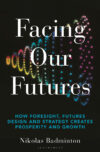
Facing Our Futures: How foresight, futures design and strategy creates prosperity and growth
Facing Our Futures is a No. 1 Amazon Best Seller in Business Research & Development, JP Morgan’s “Next Gen Pick” for their esteemed 2023 Summer Reading List, and selected as the Next Big Idea Club’s Top-50 Business Book of 2023.
Facing Our Futures is the where Nikolas Badminton draws upon his decades of experience as a futurist to provide executives and world leaders with the skillset and outlook they need to prepare their organization, team and themselves for whatever obstacles the future may hold. CEOs, executive teams, government leaders and policy makers need to gain a broader perspective and a firmer grasp on how their relevant industry, society or community is evolving and changing.
Book Nikolas
































































































Chief Futurist & Advisor
Nikolas is the Chief Futurist for the Futurist Think Tank at futurist.com, a Fellow of The Royal Society for the Encouragement of Arts, Manufactures and Commerce (The RSA), and works with trillion-dollar companies, central banks, governments, startups and those willing to challenge our poverty of imagination, awaken curiosity and create incredible futures.
He has worked with hundreds of world-leading companies, including NASA, Google, Microsoft, United Nations, United Way, Bayer, Corteva, Bank of Canada, American Express, AT&T, Thales International, Rolls Royce, Heineken, Procter & Gamble, Government of Canada, UK Home Office, Government of Cayman Islands, IDEO, and many more.
Nikolas has been a mainstay in the media for the past decade talking about our futures. He’s appeared in the ‘Smart Drugs’ documentary, was an advisor to the ‘Age of AI’ series with Robert Downley Jr and appears in the upcoming series ‘The Secrets of Big Data’ on Discovery. He appears regularly on SIRIUSXM, and on CTV’s Future Friday. His essential research has also been featured by the BBC, VICE, The Atlantic, Fast Company, Techcrunch, Business Insider, Huffington Post, Forbes, Sputnik, Venturebeat, and Global News. He also produces and interviews incredible thinkers on the renowned Exponential Minds Podcast.
Nikolas’ new best selling book, and JP Morgan’s ‘Next Gen Pick’ – ‘Facing Our Futures’ provides executives and organizations with the foundations for futures design and the tools to imagine new futures, create bolder visions, anticipate unforeseen risks, and strengthen strategic planning. Nikolas’ thinking can also be seen in the opening chapter of ‘The Future Starts Now’. Both are published by Bloomsbury Business.
Contact us to discuss your event.
Nikolas is now offering three exciting new keynotes for the 2024 events season. I see huge potential with these – thanks for discussing these with me this Friday.
- HOPE ENGINEERING – the power to change our world
- SUPERCHARGE INNOVATION – find new opportunities with futures work.
- EXPONENTIAL HUMANITY – embrace new frontiers in A.I.
Each one builds off of my extensive experience and the needs he is seeing in the clients that he speaks to.
HOPE ENGINEERING – the power to change our world
Nikolas will deliver an energetic and inspiring keynote that shows you how hope is the energy that changes our world. He will ignite curiosity and shift your mindset from what is to what if. He will share stories of cultural shifts, insights into new disruptive technologies, and strengthen strategic planning in your organization by embracing futures thinking.
Nikolas will show you how to…
- Shift your mindset from what is to what if… – see the signals of change, trends shaping our world, and stories of our futures that inspire new thinking and strengthen strategic planning, increase revenues, and drive explosive growth.
- Understand global megatrends – see what is shaping geopolitical dynamics – economic power, population growth, water-energy-food, waste, climate change and energy.
- Explore the trends that will transform your industry – Data Science, Digitization, Artificial Intelligence and automation, smart cities and urban planning, privacy and security, sustainable agriculture and food supply, space and aerospace, progressive engineering and manufacturing, transportation and logistics, fintech, and more.
Once you see the potential for building hope and change, you can’t not do the work.
SUPERCHARGE INNOVATION – uncover new opportunities, grow your business.
Every organization wants to be seen as innovative, solving real world problems and leading their industry. The majority fall at the first hurdle – taking a chance and empowering their people to explore possibilities. Leading executives are now finding that the process of innovation can be revolutionized by leading with futures work to speculation on the futures ahead of us and their place in those incredible worlds.
Nikolas will show you how to…
- Build resilience and innovation into your organization – how to build innovation mindsets and capabilities across your organization, and in the heart of every employee.
- De-risk innovation through futures work – by looking at the signals, trends and scenarios that show us the dynamics of solutions we imagine will change the world. It also allows us to feel how we are in those places using design fiction and world building.
- Think like a futurist – how to question your own history and perspectives, be wildly creative & collaborate, look for pockets of the future in the present, and build hope as an energy to change the world.
Nikolas will take you through his world-leading process of futures work and show you how that supercharges innovation and strategy to deliver increased revenues and explosive growth.
EXPONENTIAL HUMANITY – embrace new frontiers in A.I.
The exploitation of data has long been the lifeblood of industrial progress since the 1980s and now we’re transcending that ability through Artificial Intelligence, augmentation, and automation. In harnessing its ability, we hope to positively affect the world and create incredible futures to drive productivity and solve some of the greatest challenges of our times.
Nikolas will show you…
- A.I.’s transformation – and how it’s shifted from academic exploration into a real-world powerhouse of change across all industries.
- How our world is being revolutionized – thought industry automation, education being redefined, and exponential industries changed through the foundations of data science, the implementation of new A.I. tools, and the application of machine learning in the wider world and in your industry.
- How to implement A.I. in your organization – the practical abilities and skill sets needed, the structural considerations for strategic planning, and the mindset needed for continual development and growth in A.I. capabilities.
Today, everything changes. Let Nikolas guide you on your first steps forward into a bigger world and share his experience building these systems since the 1990s.
Contact Nikolas to discuss igniting your event with futures thinking.
Facing Our Futures: How Foresight, Futures Design and Strategy Creates Prosperity and Growth is a No. 1 Amazon Best Seller in Business Research & Development, JP Morgan’s “Next Gen Pick” for their esteemed 2023 Summer Reading List, and selected as a book to read by the Next Big Idea Club – purchase here.
Bulk purchase is available for your event – reach out to discuss.
Facing Our Futures: How Foresight, Futures Design and Strategy Creates Prosperity and Growth presents a fascinating insight into how professionals and businesses can develop their foresight and strategy to ensure that they are prepared for an unpredictable future.
Businesses, organizations and society-at-large are all subject to unforeseeable events and incidents that often have a dramatic impact upon prosperity and profit. Due to their unpredictable nature, business leaders and executive teams are unable to prepare for these specific events. But, through innovation, strategizing and an open-minded approach, they can restructure their organization and practices in order to mitigate (or even take advantage of) the impact of such events.
In Facing Our Futures, Nikolas Badminton draws upon his decades of experience as a consultant and futurist to provide readers with the skillset and outlook they need to prepare their organization, team and themselves for whatever obstacles the future may hold. CEOs, executive teams, government leaders and policy makers need to gain a broader perspective and a firmer grasp on how their relevant industry, society or community is evolving and changing. Once they have acquired this foresight, they need to then discover how to fully harness it – by strengthening their foundations, forecasting and establishing a resilient and adaptable strategy.
Facing Our Futures acts as a primer on the value of seeing how bad things can get and the power in imagining these futures. It also provides a proven strategic planning and foresight methodology – the Positive Dystopia Canvas (PDC) – that allows leaders to supercharge their teams to build evocative visions of futures that strengthen planning today.
The world is reeling in the wake of the pandemic, with global water-energy-food crises, geopolitical unrest and the specter of a recession.
Many say that now is the time to regroup and get focused on a way forward. We say that you cannot do that without exploring the potentialities of our futures beyond the next 2 to 3 years to see how we can establish more bold visions of the impact we can make.
Nikolas will deliver an energetic and inspiring keynote that ignites curiosity, shifts your mindset from what is to what if, and teaches you how to think like a futurist. He will share stories of the cultural shifts and winning strategies you have to employ in uncertain times. And, beyond that he will guide you through a workshop that helps you:
- Understand how foresight helps us navigate through uncertain times – we know that foresight is the missing link between strategic planning, disruption and our futures. Exploring positive and challenging futures is key to establishing a roadmap to navigate recessions and
- See shifting global megatrends and geopolitical dynamics that will shape the next 10 years – economic power, population growth, water-energy-food, waste, climate change and energy.
- Explore the trends and tensions that will change your industry – Future of Work, Artificial Intelligence and automation, Smart Cities and Urban Planning, Metaverse and Web3, Privacy and Security, Agriculture, Aerospace, Engineering and Manufacturing, Transportation and Logistics, Finance and Insurance.
- Establish a sustainability mindset – ESG policy, United Nations SDGs, and circular economy
- Learn how to operationalize foresight to create organizational resiliency – how we can write scenarios and tell stories of our futures
As always, the keynote and workshop is built in collaboration with clients to create resiliency, an incredible vision of our futures and a plan to get there.
Reach out to Futurist Speaker Nikolas Badminton to discuss how this can help you and your organizations navigate the next 3 to 5 years – click here.
Nikolas Badminton is a world-renowned futurist speaker, the Chief Futurist at Futurist.com, Consultant, Author, Media Producer, and Executive Advisor. He has delivered futurist keynotes to and worked with executives and the C-suite at over 300 of the world’s most impactful organizations and governments.
Nikolas and the Futurist Think Tank help executives learn strategic foresight practices that shape the visions that shape impactful organizations, trillion-dollar companies, startups, progressive governments, and multi-billion dollar investment funds.
Nikolas’ keynotes are always customized for what you need and ignite your audience’s thinking to shift midgets from WHAT IS TO WHAT IF… The result is the ability to be curious, explore possibilities, and imagine incredible futures for all.
All keynotes are available in-person at your event or workplace, full virtual from Nikolas’ Future Casting studio (4K streaming and high-production), or in hybrid format using your studio or event space.
Contact us to discuss your event.
“If operations are the body, strategy is the brain then Foresight is the awareness and consciousness of an organization. We need to embrace foresight and challenge our collective poverty of imagination to create long-term growth, profit and resiliency.” Nikolas Badminton
World leaders, impactful organizations and governments engage Nikolas Badminton and the Futurist Think Tank to help them build the skillsets needed for strategic foresight, anticipatory organizational capabilities and the ability to be curious and consider the futures ahead of us deeply.
The Futurist Think Tank works with executives to
- Discuss of global megatrends, secondary research and scanning for signals.
- Identify disruptive industry trends.
- Seek challenges and seeing unforeseen risks.
- Build WHAT IF… futures scenarios.
- Write speculative fiction and designing experiential futures.
- Backcasting and risk anticipation.
The result is bolder future visions of that might be and imagined future states that allow teams to anticipate unseen risks and create stronger strategic plans that guide the companies forward.
Contact us to discuss your project needs.
“If operations are the body, strategy is the brain then Foresight is the awareness and consciousness of an organization. We need to embrace foresight and challenge our collective poverty of imagination to create long-term profit and resiliency.” Nikolas Badminton
Progressive organizations develop strategic foresight capabilities to strengthen strategic planning, innovation initiatives, and operations. In fact, organizations that build anticipatory capabilities, strategic foresight practices, and future-proof their business have been found to outperform the average by a 33% higher profitability and a 200% higher growth. Those organizations that do not can face performance discounts of 37% to 108%.
Nikolas Badminton and the Futurist Think Tank works with the C-suite and executives to provide Strategic Foresight services, including:
- Foresight training
- Foresight workshops (using our proprietary Foresight Development Framework)
- Future product exploration
- Discuss of global megatrends, secondary research and scanning for signals.
- Identify disruptive industry trends.
- Seek challenges and seeing unforeseen risks.
- Build WHAT IF… futures scenarios.
- Write speculative fiction and designing experiential futures.
- Backcasting and risk anticipation.
Contact us to discuss your project needs.
“If operations are the body, strategy is the brain then Foresight is the awareness and consciousness of an organization. We need to embrace foresight and challenge our collective poverty of imagination to create long-term profit and resiliency.” Nikolas Badminton
Nikolas Badminton provides coaching to C-suite executives on augmenting corporate strategic planning and risk analysis with foresight processes and capabilities. His ongoing counsel and collaborative methods create the ability for executives to more deeply consider our futures and bring incredible value to their organizations.
In addition, monthly and quarterly signals and trends reports can be provided with active coaching on the implications of
- Global megatrends, secondary research and scanning for signals.
- Disruptive industry trends.
- Unforeseen challenges and risks.
- WHAT IF… futures scenarios.
- Exploration of speculative fiction and experiential futures.
- Backcasting and risk anticipation.
Futures coaching can also be provided for incumbent and incoming Futurist-in-Residence and Chief Futures Officers (CFuO) to ensure a broader worldview is maintained and a connection to the wider foresight community is ongoing.
Contact us to discuss your coaching needs.
“If operations are the body, strategy is the brain then Foresight is the awareness and consciousness of an organization. We need to embrace foresight and challenge our collective poverty of imagination to create long-term profit and resiliency.” Nikolas Badminton
Imagine being able to ignite your organization’s curiosity, explore our futures together, and imagine multiple future scenarios that might play out for your industry and organization. Imagine developing that capability and using that foresight to make decisions that can influence the future you want for your organization, your industry, and the world.
Nikolas Badminton and the Futurist Think Tank provides impactful organizations with Foresight Training and Workshops that allow clients looking to learn about the tools and techniques used in foresight, including
- Global megatrends monitoring
- Signals scanning and trend identification
- WHAT IF… scenario development
- Causal Layered Analysis (CLA)
- Foresight Development Framework.
- Positive-Dystopian Framework.
- Speculative Design and Experiential Futures
- Future product design
- Backcasting
- And, other strategic foresight methods.
Contact us to discuss your workshop needs.
Nikolas Badminton and the team at the FUTURIST THINK TANK have developed an interactive experience where you can interact with the keynote and learn about building complex futures stories from the signals, trends and scenarios we explore together across a number of areas that we identify as important for you and your audience.
Areas of exploration can include global megatrends, evolution and transformation in your industry, algorithms and data growth, security and privacy, circularity and sustainability (ESG), and more. We adjust for your industry and organization.
This interactive game is played throughout the keynote and can teach you how to
- Understand signals and trends that will shape the future of your industry
- Explore scenarios that define technological, human and wildcard futures
- Shift your mindset from what is to WHAT IF… and develop over 200 stories that can be used as a starting point for exploring the future of your organization and strategic planning.
- Create fun, engagement and discussion on important topics within your audience
And, following the keynote you will have a deeper understanding of how your organization considers possible futures – is it tech-driven , humanity-focused or hoping that they’ll survive the changes coming your way?
Contact us to discuss your event and how ‘The Futures Game’ will ignite thinking.
Chief Futurist and leader of the Futurist Think Tank Nikolas Badminton presents the Exponential Minds Podcast where he explores ideas with experts from futures thinking all fields around the world discussing how humanity is impacted by the exponential growth in technology and the thinking behind it.
Since 2016 he has been interviewing incredible creators, designers, thinkers and futurists on their philosophies and work. These include – Denny Unger, Kharis O’Connell, Dr. Wendy Schultz, Madeline Ashby, Karl Schroeder, Monika Bielskyte, Leah Zaidi, Dre Labre, Dr. Jake Sotiriadis, Dr. Joseph Voros, Tracey Follows, Bronwyn Williams, Loes Damhof, Ian Burbidge, Carol Anne Hilton, Rotem Petranker, Pia Puolakka, Chris Dancy, Peter Nowak, Natalie Nixon, Melissa Eshaghbeigi, Rocky Ozaki, Sasha Despotovski, Rafeeq Bosch, Cathy Hackl, Ben Feist, Marianne Lefever, Anne Boysen, Glen Hiemstra, Shawn Kanungo, Liza Amlani, and more.
Subscribe on Anchor, Spotify, Apple and Google Podcasts.
Futurist.com began in 1993, when Glen Hiemstra was working on a project in the greater Seattle area to be called ‘Smart Seattle’. From a project team member, Jan Greylorn, he learned about Mosaic, the first web browser that was going to launch that very year, at which point the Internet would start to become the World Wide Web. He also learned that there was an international registry for what would become Home Pages or Domains on this new World Wide Web.
Glen was primed to hear such news because he had literally been studying the future of communication on the Internet since 1980, publishing some of the early academic work on that topic while in academia. And, Glen had been using the early Internet in my futurist consulting business for years via AOL. So he immediately inquired about registering the domain Futurist.com and was surprised to learn that neither the World Future Society nor Alvin Toffler nor anyone else had registered Futurist.com. So Glen stepped up and did just that.
And now, over 27 years later, as so well expressed by the poet David Whyte, “I turned my face for a moment, and it became my life.”
By 1995 with the help of Brenda Cooper (now an award winning science fiction writer and member of the Futurist.com Think Tank, but then an IT manager for a small city who was experimenting in writing HTML code) Glen had put a website up, and by 1998 it was well established. You can find a version of that early Futurist.com on the Wayback Machine – this is about the oldest version that you can access.
We at futurist.com have always offered free information to the public, written by Glen and guest writers, while also acting as a marketing tool for his futurist business of consulting, research, and keynote speaking. At various times Glen tried to make it more of a team operation, most recently with the creation of the Futurist.com Think Tank in 2013.
In 2018 Nikolas Badminton had the the pleasure of connecting and working with Glen and the Think Tank members in running projects, delivering futurist keynotes, creating content and advising clients.
Over the past 25 years Nikolas benefited from the wisdom gained from studying artificial intelligence and linguistics to delivering large scale data analytics solutions to advancing digital strategy and consumer engagement through advertising and sharing economy platforms. This experience is the bedrock for the futures practice he have built over the past 10 years.
In that time Nikolas worked as a futurist speaker and consultant to keynote and advise over 300 companies, established national TV and radio conversations on the future, published research into the implications of artificial intelligence and technologies’ effect on mental health, and advised A-list Hollywood in producing documentaries. In addition, Nikolas has shared over 750 articles on his own website – www.nikolasbadminton.com – in addition to speaking around the world, working with the most impactful companies, and curating events like Cyborg Camp YVR, Dark Futures and Future Camp.
The parallels between the futures practice Nikolas built and what Glen has been delivering for decades are hugely complementary so we decided for Nikolas to take the reins on running Futurist.com for the next 27 years, and beyond.
Nikolas Badminton FRSA takes on the reigns at Chief Futurist of the Futurist Think Tank while Glen Hiemstra remains involved at a distance as Founder and Futurist Emeritus.
Our futures are certainly bright. Come along for the ride.
Contact us to find out more.